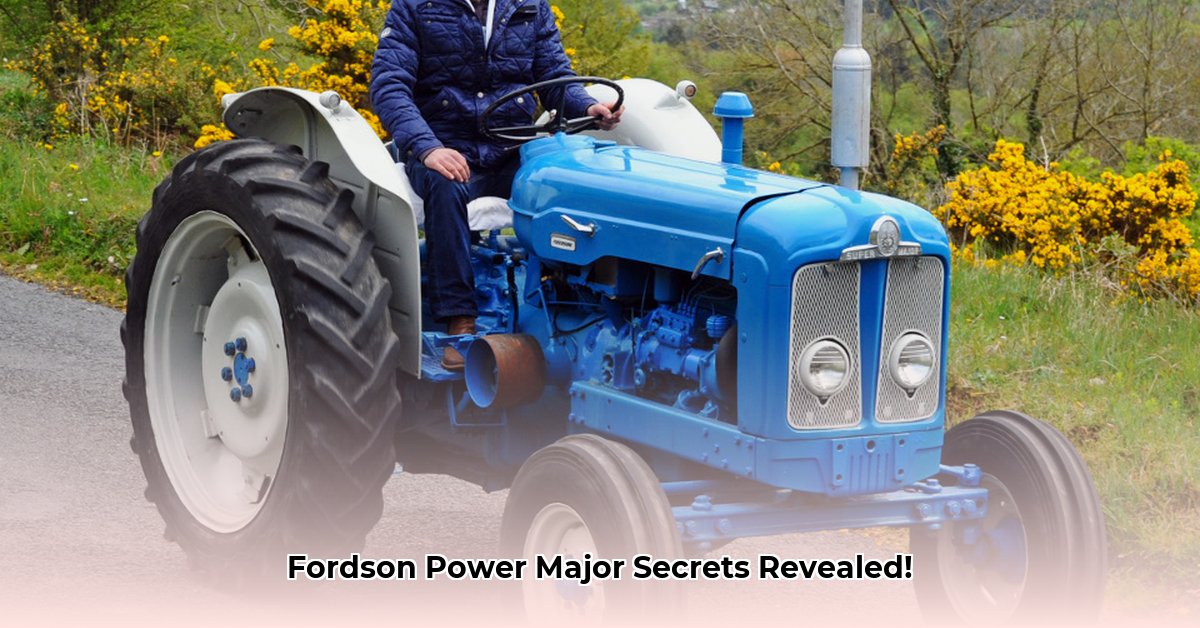
Tractor Fordson Power Major: A Deep Dive into a Classic Farmhand (1958-1961)
The Fordson Power Major, a stalwart of the late 1950s and early 1960s, wasn't known for flashy features. Instead, its enduring legacy rests on its robust build and dependable performance in the fields. This detailed guide explores the historical context, technical specifications, operational characteristics, and restoration tips for this iconic tractor, separating fact from the occasional conflicting information found in various sources. Whether you're a seasoned collector or a curious enthusiast, prepare to delve into the heart of this agricultural workhorse. For more Ford tractor specs, check out this helpful resource.
Historical Context: A Product of its Time
Emerging from a period of significant agricultural mechanization, the Fordson Power Major (1958-1961) embodied a blend of established engineering principles and nascent technological advancements. Built upon Ford's extensive experience in tractor manufacturing, the Power Major aimed to provide dependable power and versatility to farmers, even if it lacked the more refined features emerging in competing models. It represented a crucial step in Ford’s sustained commitment to agricultural support. How did it compare technologically to its contemporaries, and what were the key limitations?
Technical Specifications & Features: Decoding the Engine and Beyond
The Fordson Power Major offered a choice of two engines: a 3.6-liter diesel or a 3.3-liter gasoline engine. Both provided a respectable power output for the era, approximately 47.65 horsepower at the PTO (power take-off) and around 42.63 horsepower at the drawbar. Isn't that impressive for its time? However, one immediately notices inconsistencies in reported specifications across various resources. Could these inconsistencies be attributed to inconsistencies in measurement and optional equipment? This is a challenge that enthusiasts encounter often when researching this tractor.
The six-speed gearbox, while durable, was unsynchronized – a detail that significantly impacted ease of use. This necessitated skillful gear changes, which could become challenging for newer operators. Below is a summarized technical specification table based on aggregated data from reputable sources:
| Specification | Diesel Engine | Gasoline Engine | Notes |
|---|---|---|---|
| Engine Size (liters) | 3.6 | 3.3 | |
| PTO Horsepower (hp) | ~47.65 | ~47.65 | Approximate; variations due to testing methods and engine condition. |
| Drawbar Horsepower (hp) | ~42.63 | ~42.63 | Approximate; variations due to testing methods and engine condition. |
| Transmission | 6-speed, unsynchronized | 6-speed, unsynchronized | This feature, while robust, presents a unique challenge to modern operators. |
| Weight (approximate lbs) | 4540 - 5200 | 4540 - 5200 | Significant variations exist across sources; see detailed analysis below. |
Addressing Weight Discrepancies: The most significant discrepancy across sources lies in reported weight. Values range widely from under 5,000 lbs to over 10,000 lbs. This disparity is likely due to several factors: variations in optional equipment (like front weights, different tire configurations), different measurement methodologies across different eras, and the inherent variations in tractors produced over several years.
Operational Characteristics: Performance and Handling in the Field
In field operations, the Fordson Power Major proved to be a reliable workhorse capable of handling a wide variety of tasks. Its sturdy design and relatively high power output for that era made it suitable for plowing, hauling, and powering implements via the PTO. However, the lack of synchronization in the gearbox added a learning curve for novice operators, and the open operator station offered minimal protection from the elements. Experienced agricultural equipment mechanics can certainly provide insightful commentary. Did this lack of operator comfort affect the tractor’s popularity?
Comparison to Contemporaries: Assessing its Strengths and Weaknesses
Compared to contemporary tractors, the Fordson Power Major occupied a distinctive niche. While offering robust power and dependability, it lacked the advancements in operator comfort and ease of use found in some competitors. Its unsynchronized gearbox and open station placed it at a disadvantage in terms of convenience, but its simple design and ruggedness made it a favored choice for many farmers who prioritized functionality and raw power. Where did it stand out, and where did it fall short in comparison?
Restoration and Maintenance: Guiding Principles for Enthusiasts
Restoring a Fordson Power Major is an engaging yet demanding project for collectors and enthusiasts. The age of the tractor means parts sourcing can be challenging, necessitating frequent searches within the broader collector community. Common maintenance issues include gearbox wear—particularly concerning the unsynchronized gears—hydraulic fluid leaks, and electrical faults. Routine maintenance, however, can significantly extend the lifespan of this classic machine. What are the most common issues, and what preventative measures can enthusiasts take?
Conclusion: The Enduring Legacy of the Fordson Power Major
The Fordson Power Major, despite its comparatively simpler design compared to later tractors, remains a significant piece of agricultural history. Its robust nature and reliable performance cemented its place in the hearts of many farmers. While modern conveniences might be lacking, its enduring appeal lies in its simple, effective design and its ability to withstand the rigors of agricultural work. It reminds us of a time when the focus was solely on functionality and rugged dependability.